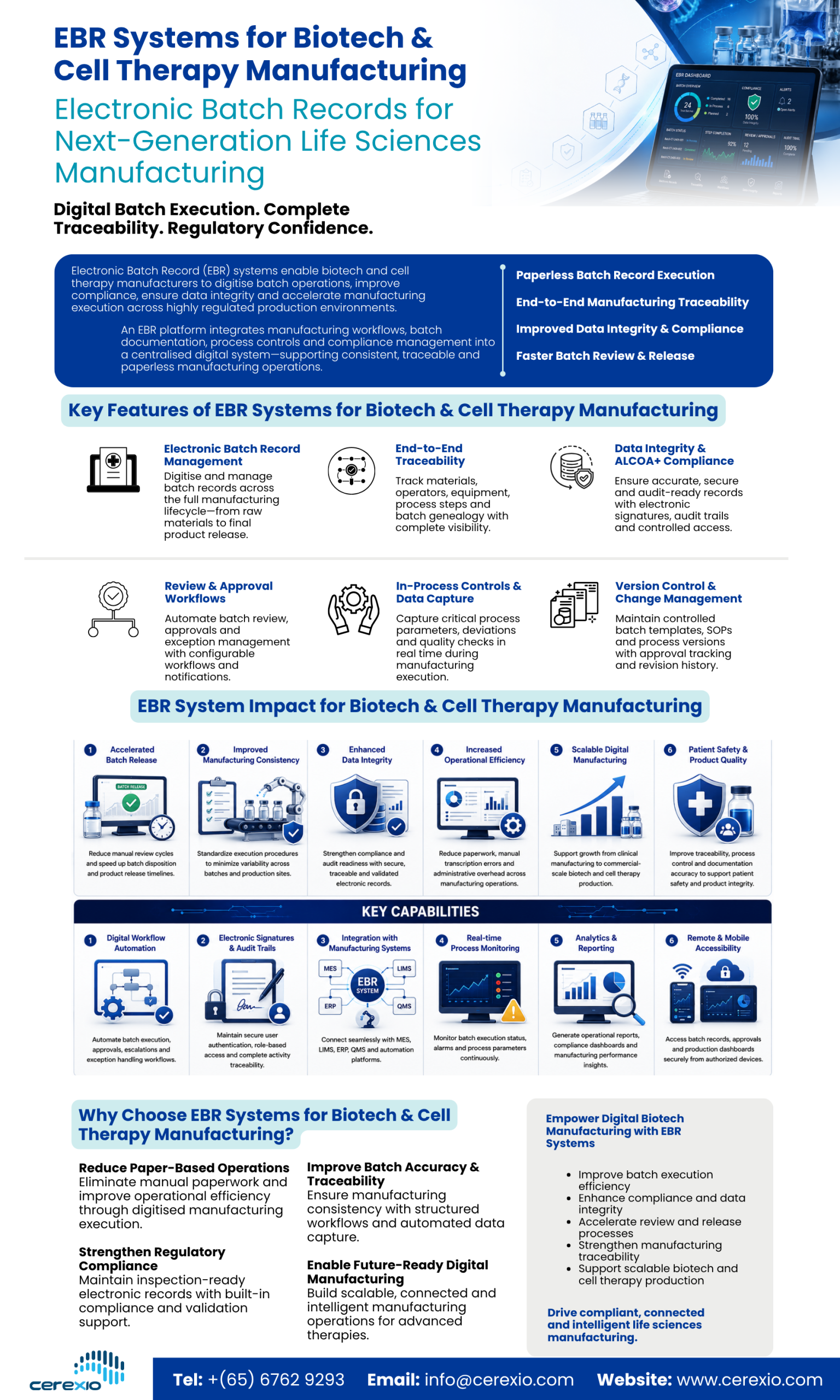
Biotech and cell therapy manufacturers require highly controlled, traceable and compliant production processes to support advanced therapies and maintain regulatory confidence across sensitive manufacturing operations. This infographic explains how Electronic Batch Record (EBR) systems digitize manufacturing workflows and replace paper-based processes with centralized digital records that improve operational accuracy, compliance and manufacturing efficiency. The design highlights important EBR capabilities including batch record management, end-to-end traceability, electronic signatures, audit trails, in-process monitoring and data integrity controls aligned with ALCOA+ compliance principles. It also demonstrates how EBR systems accelerate batch review and release processes while improving manufacturing consistency, reducing manual documentation errors and strengthening process visibility across biotech and cell therapy production environments. The infographic further showcases integration capabilities with MES, ERP, LIMS and quality management systems to support connected digital manufacturing ecosystems for advanced life sciences operations. Overall, the infographic positions EBR systems as a critical enabler of compliant, scalable and future-ready biotech manufacturing by improving traceability, operational control, product quality and regulatory readiness throughout the production lifecycle. The infographic is added below.