
Kitchen of the Week: Beautiful Marriage of Old and New
Cabinetry that honors the historic British home while serving a modern family was key to the kitchen’s design

For anyone with a historic home, it’s a common dilemma — how to respect the age and character of the building while making sure the interior is fit for 21st century life. That was the challenge for the team at Guild Anderson Furniture when they were asked to design and make a high-functioning kitchen sympathetic to the architecture of this Georgian house on the border between England and Scotland.
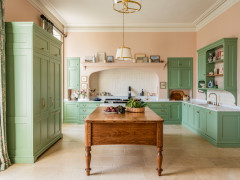
The kitchen’s traditional cabinetry cleverly integrates modern appliances. A large freestanding “housekeeper’s cupboard” contains the refrigerator. A small induction cooktop sits neatly next to a classic oil-fired range. And a device-charging drawer is discreetly tucked into a 19th-century-inspired “cook’s table.”
The kitchen’s traditional cabinetry cleverly integrates modern appliances. A large freestanding “housekeeper’s cupboard” contains the refrigerator. A small induction cooktop sits neatly next to a classic oil-fired range. And a device-charging drawer is discreetly tucked into a 19th-century-inspired “cook’s table.”
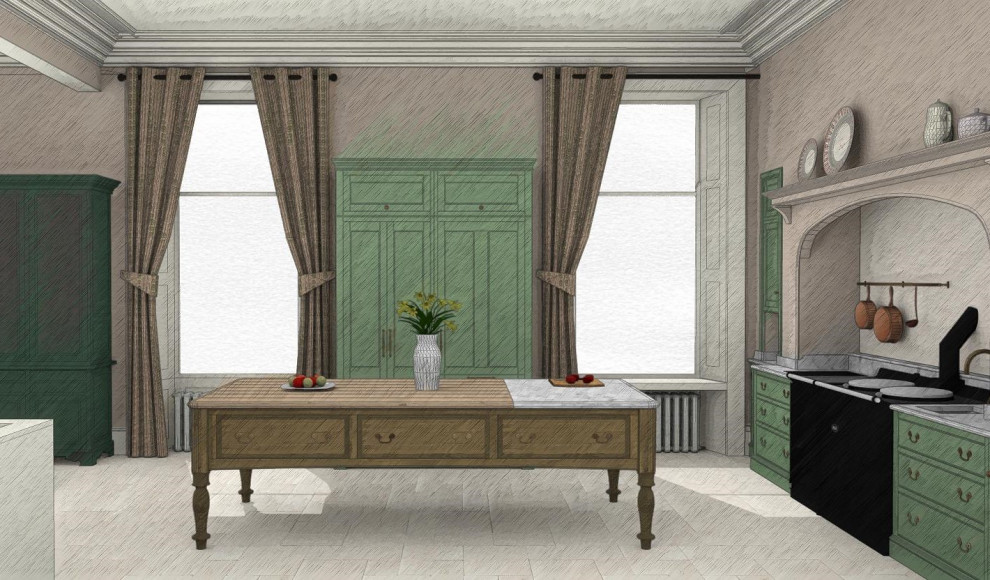
The kitchen and dining area were originally two rooms, and the homeowners had an interior wall taken down to open up the space.
This 3D illustration of the designers’ ideas shows where the wall was removed. The left-hand side of the room is a dining area (not photographed).
Find a kitchen designer on Houzz
This 3D illustration of the designers’ ideas shows where the wall was removed. The left-hand side of the room is a dining area (not photographed).
Find a kitchen designer on Houzz
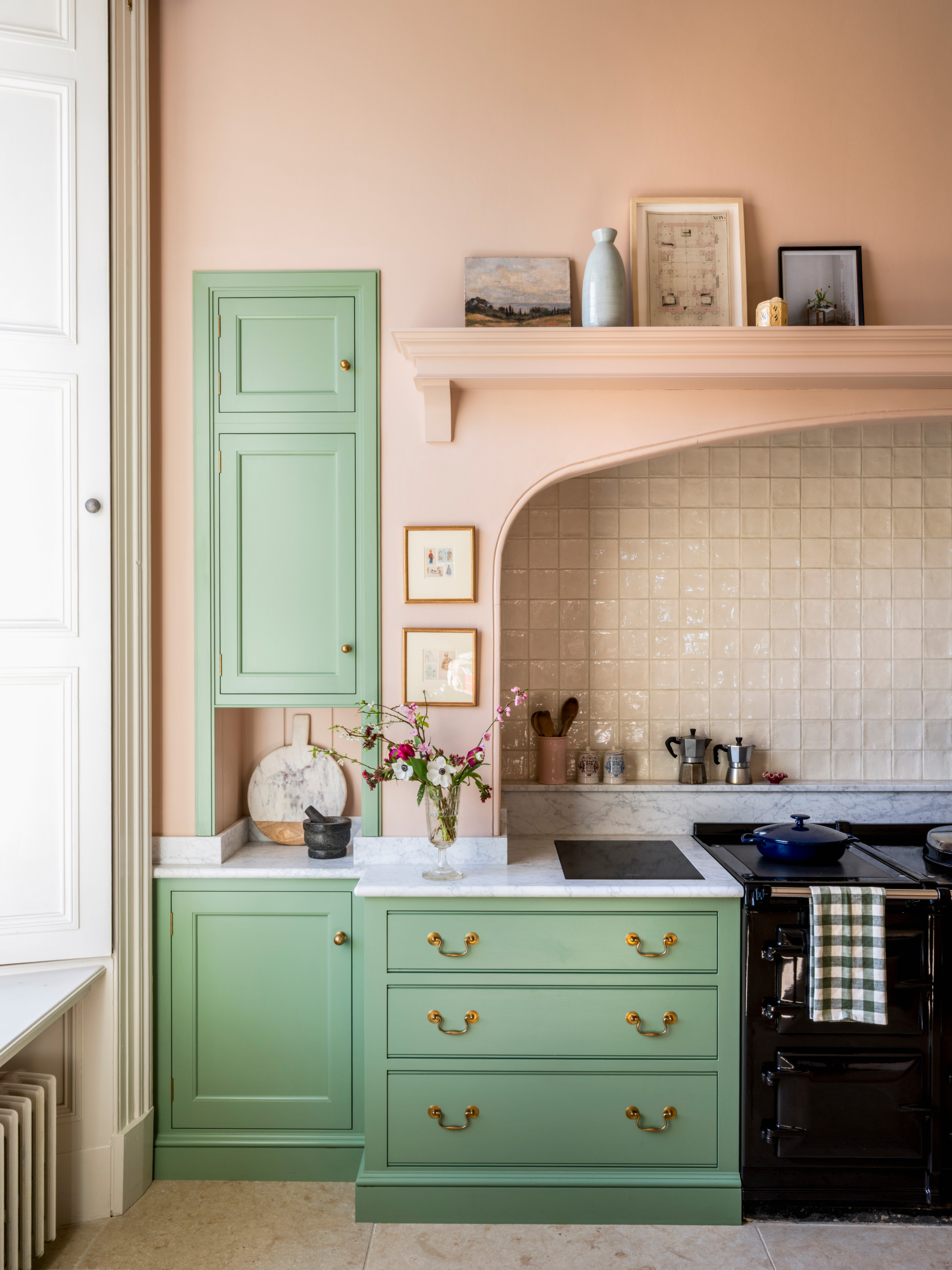
One of the key design decisions was to build out the side wall to create a focal point. “We moved the wall forward to create a chimney breast and inset cupboards,” Petherick says. “In an early- to mid-1800s kitchen, the range would sit in the center of the wall and was normally housed within some kind of fireplace, so in order to be sympathetic to the building, we brought the wall forward and built a mantel.”
The classic, always on, oil-fired Aga range (no longer made by Aga) was in place and had to stay there. These have an oil burner in the center that heats the cast-iron body, which in turn radiates heat to the hotplates and ovens. As homeowners don’t always want to have the oven on in hot weather, the team also installed an induction cooktop, seen here to the left of the range.
Induction hob: Miele
The classic, always on, oil-fired Aga range (no longer made by Aga) was in place and had to stay there. These have an oil burner in the center that heats the cast-iron body, which in turn radiates heat to the hotplates and ovens. As homeowners don’t always want to have the oven on in hot weather, the team also installed an induction cooktop, seen here to the left of the range.
Induction hob: Miele
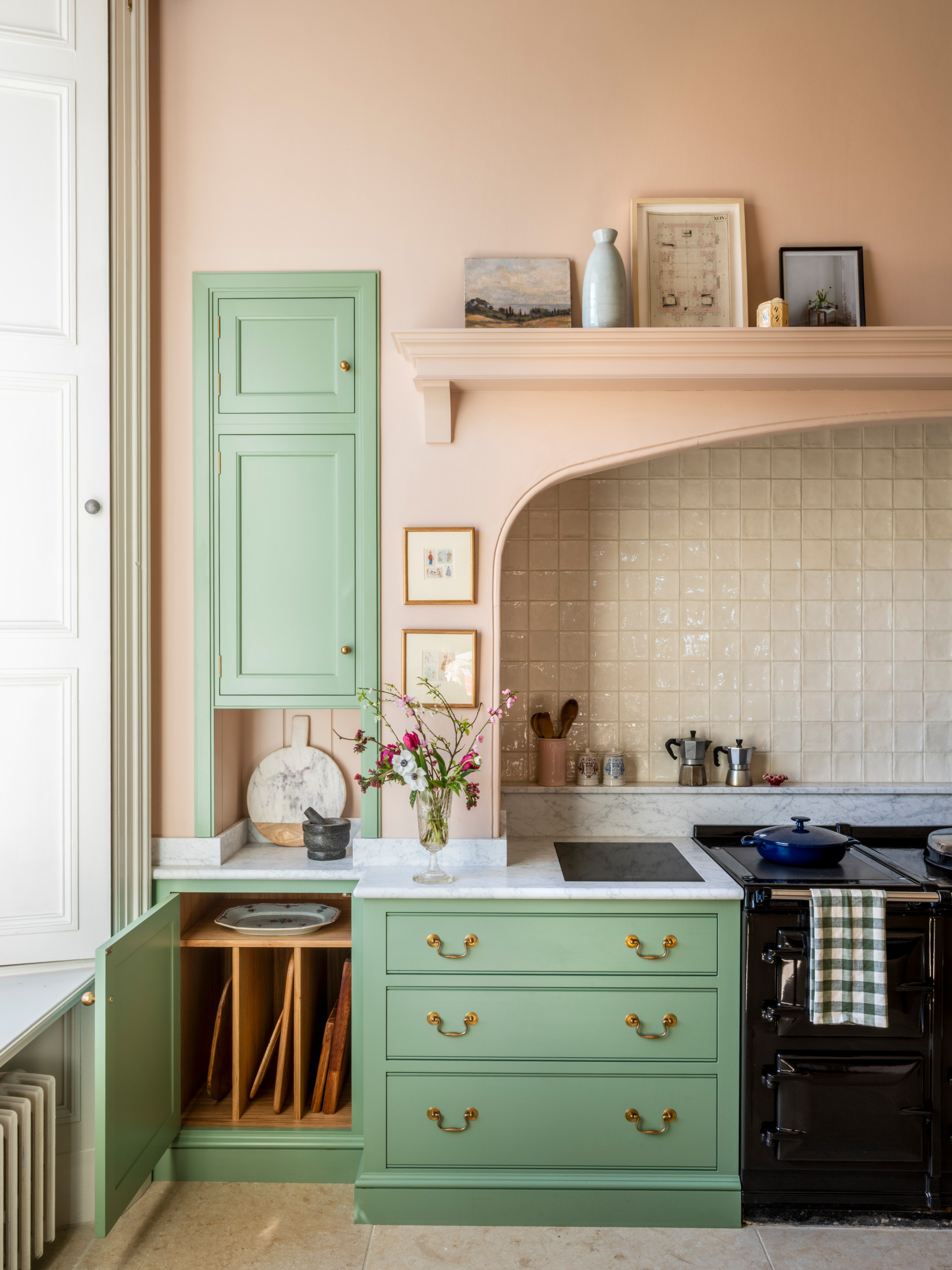
The small cabinet to the left has vertical slots for baking sheets and cutting boards, while the long drawers contain utensils. The inset wall cabinets on either side of the mantel have adjustable shelves for pots and pans.
The clients chose fresh green for the cabinets to reflect the countryside setting, and pale pink walls for gentle warmth.
Cabinet paint: Breakfast Room Green, Farrow & Ball; wall paint: Setting Plaster, Farrow & Ball; cabinet hardware: Armac Martin
The clients chose fresh green for the cabinets to reflect the countryside setting, and pale pink walls for gentle warmth.
Cabinet paint: Breakfast Room Green, Farrow & Ball; wall paint: Setting Plaster, Farrow & Ball; cabinet hardware: Armac Martin
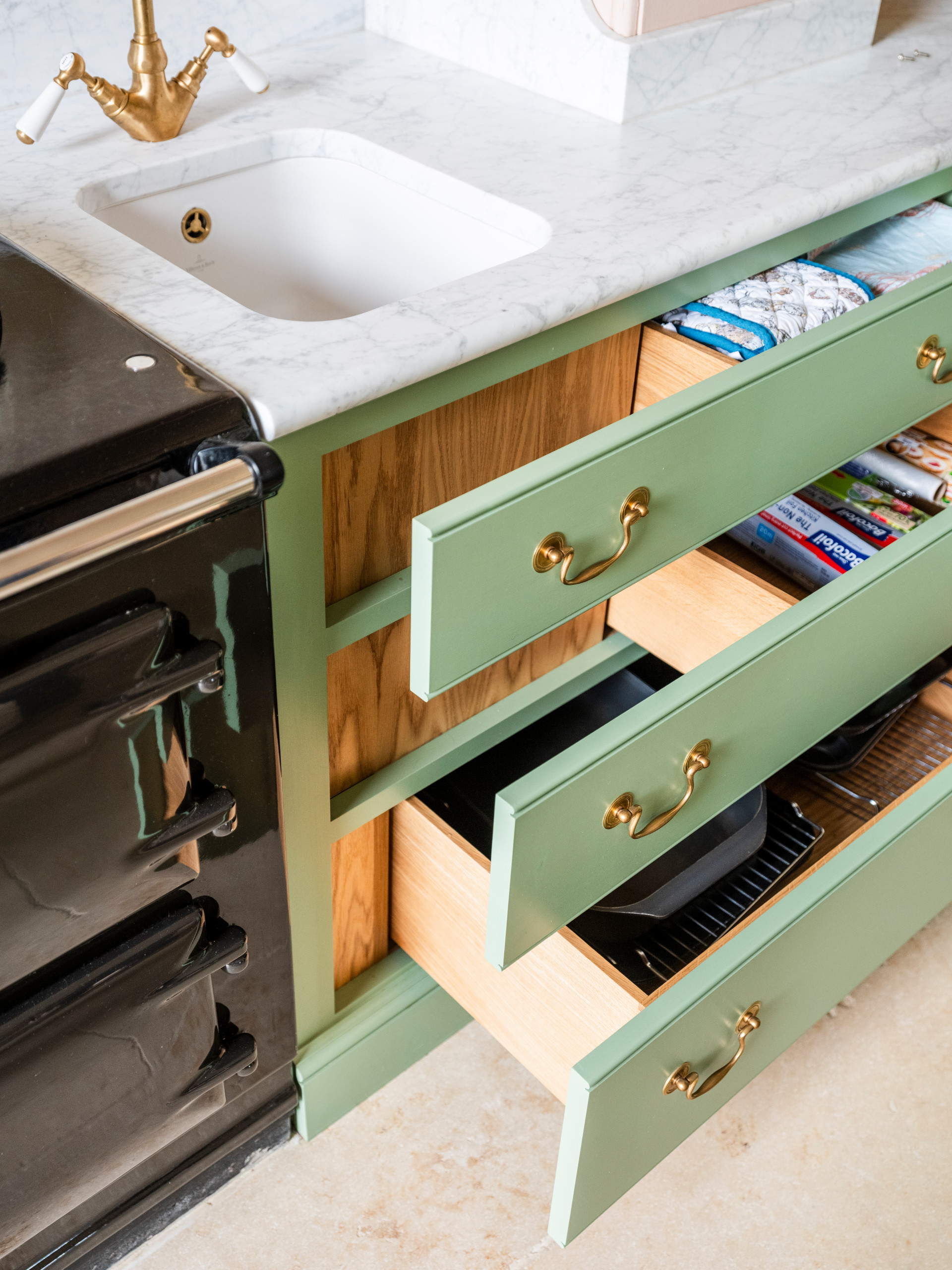
The drawers to the right of the range have full-width fronts for symmetry, but are smaller inside to allow space for the small prep sink. They’re used to store essentials such as oven gloves, cling film and, in the wider bottom drawer, baking sheets and cooling racks.
Small sink: Villeroy & Boch
See why you should hire a professional who uses Houzz Pro software
Small sink: Villeroy & Boch
See why you should hire a professional who uses Houzz Pro software
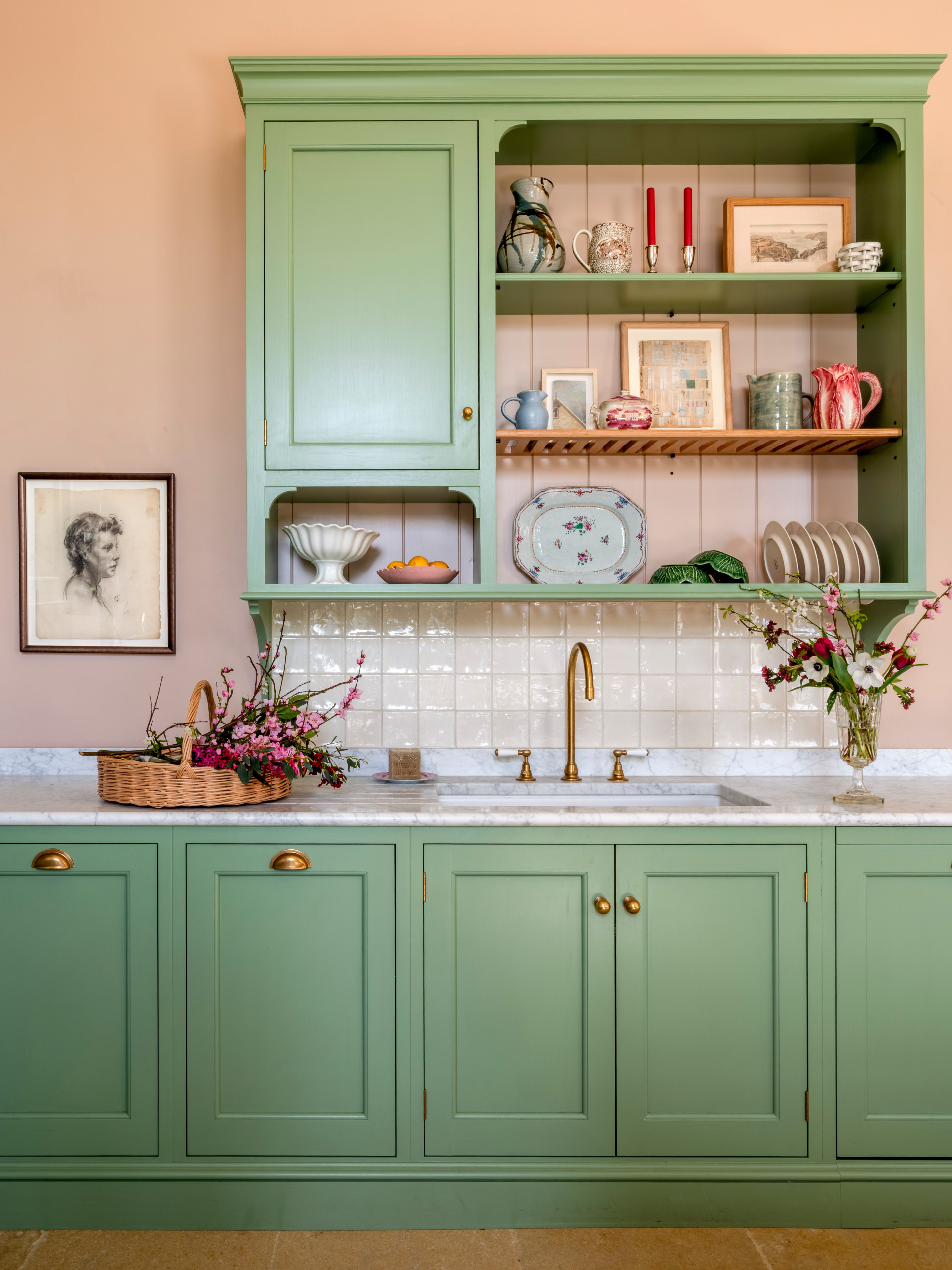
The decorative wall cabinet incorporates another traditional design detail — slatted shelves that allow washed dishware to drain into the under-mounted farmhouse sink below. One of the owners grew up in a historic house that had a similar piece.
The countertops are Carrara marble. “This was the marble of choice in most English country houses, mainly because there wasn’t much choice — that was principally the stone they were digging out of the mountains in Italy at the time,” Petherick says. “It was very popular because it went with most schemes and it’s quite understated.”
The backsplashes here and behind the range are formed of handmade tile with an undulating surface that catches the light and adds texture.
The bottom cabinets in this run contain two bins on the left and a dishwasher on the right, with a cupboard for cleaning supplies beneath the sink. The washing machine and dryer are in a separate laundry room.
Faucets: Barber Wilsons; sink: Shaws of Darwen
The countertops are Carrara marble. “This was the marble of choice in most English country houses, mainly because there wasn’t much choice — that was principally the stone they were digging out of the mountains in Italy at the time,” Petherick says. “It was very popular because it went with most schemes and it’s quite understated.”
The backsplashes here and behind the range are formed of handmade tile with an undulating surface that catches the light and adds texture.
The bottom cabinets in this run contain two bins on the left and a dishwasher on the right, with a cupboard for cleaning supplies beneath the sink. The washing machine and dryer are in a separate laundry room.
Faucets: Barber Wilsons; sink: Shaws of Darwen
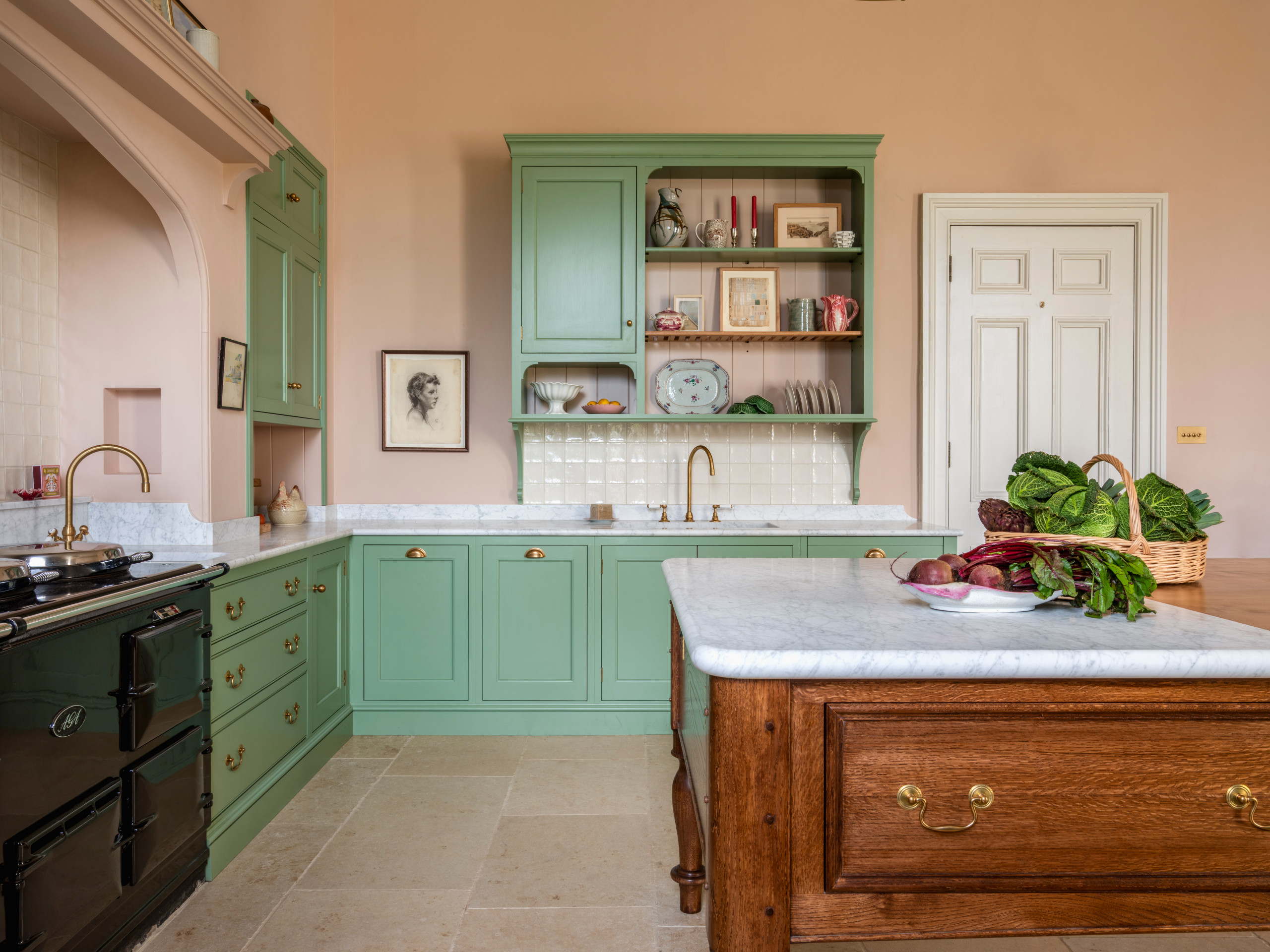
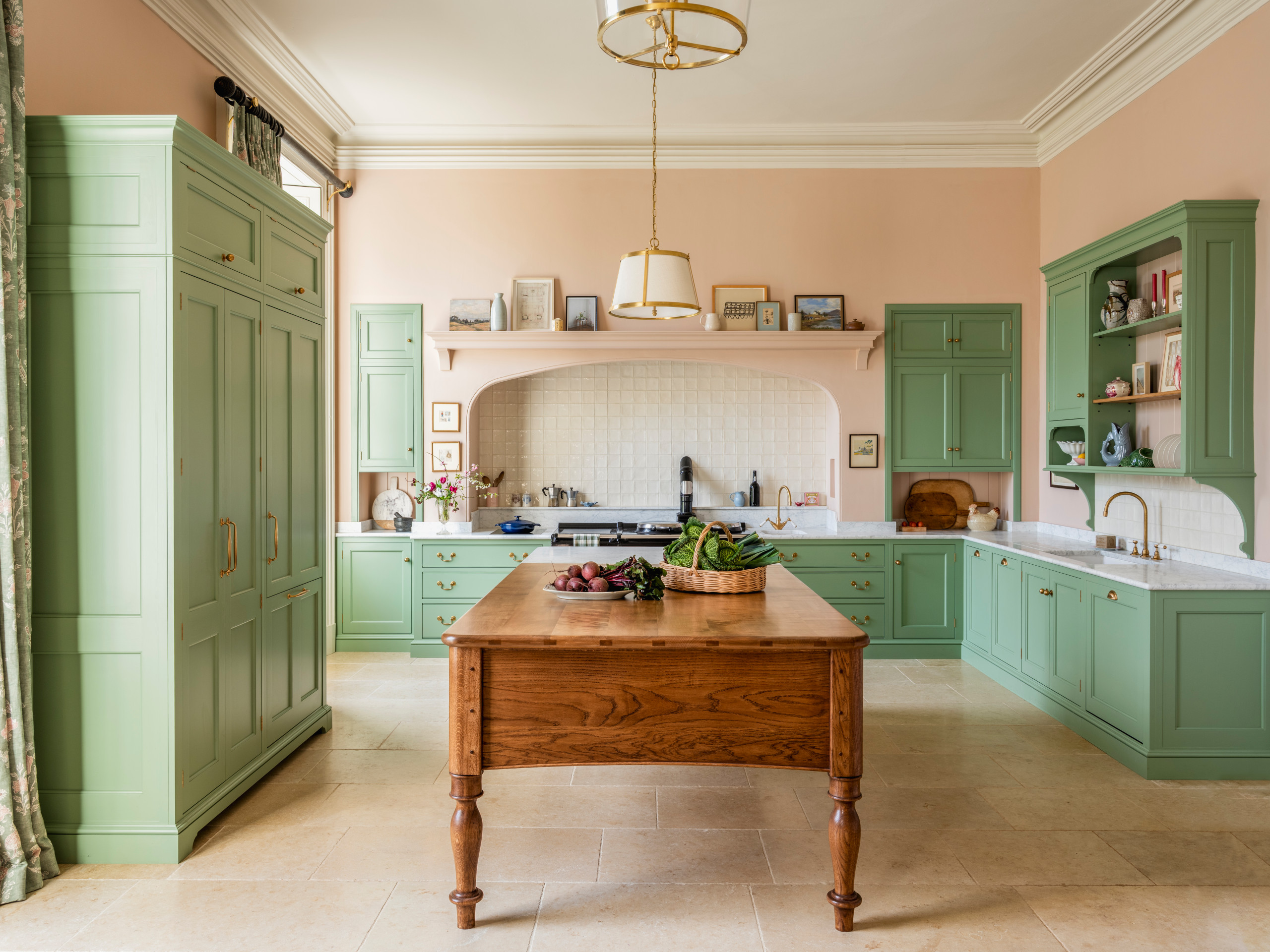
The team designed and made the cook’s table — a traditional island on legs used for food prep. “The cook’s table was an important part of mid-19th-century kitchen design — it was where food for the whole household was prepared,” Petherick says. “We took inspiration from Lanhydrock House,” a quintessential Victorian country house kitchen in Cornwall, England. “It helps lighten up the room, because a big block island can look a bit brutal in these spaces.
“The main base and legs are made of European oak, which we aged with traditional French polish — shellac finished with wax,” he says. “The top is sycamore, which has been scrubbed to look as if it’s been worked at and cleaned by housekeepers for many years.”
The owners love to bake, so there’s a section of 1.5 inch Carrara marble at the end of the table. “Baking is an important part of family life,” Petherick says. “The children like to bake, and marble is a cool material for rolling pastry.”
“The main base and legs are made of European oak, which we aged with traditional French polish — shellac finished with wax,” he says. “The top is sycamore, which has been scrubbed to look as if it’s been worked at and cleaned by housekeepers for many years.”
The owners love to bake, so there’s a section of 1.5 inch Carrara marble at the end of the table. “Baking is an important part of family life,” Petherick says. “The children like to bake, and marble is a cool material for rolling pastry.”
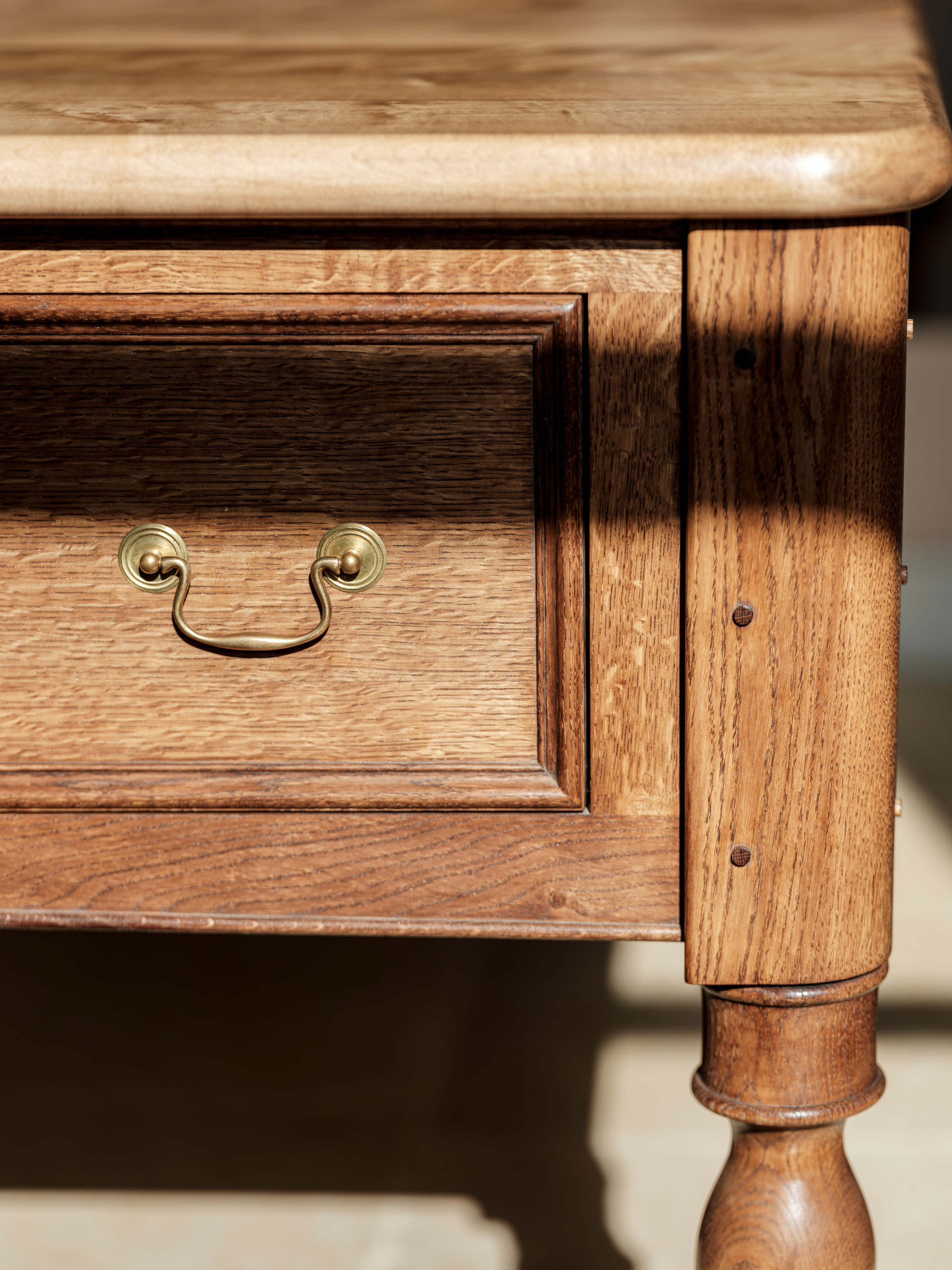
Tiny wooden pegs help keep the tenon and mortise joints tight, while hand-turned legs add traditional detail.
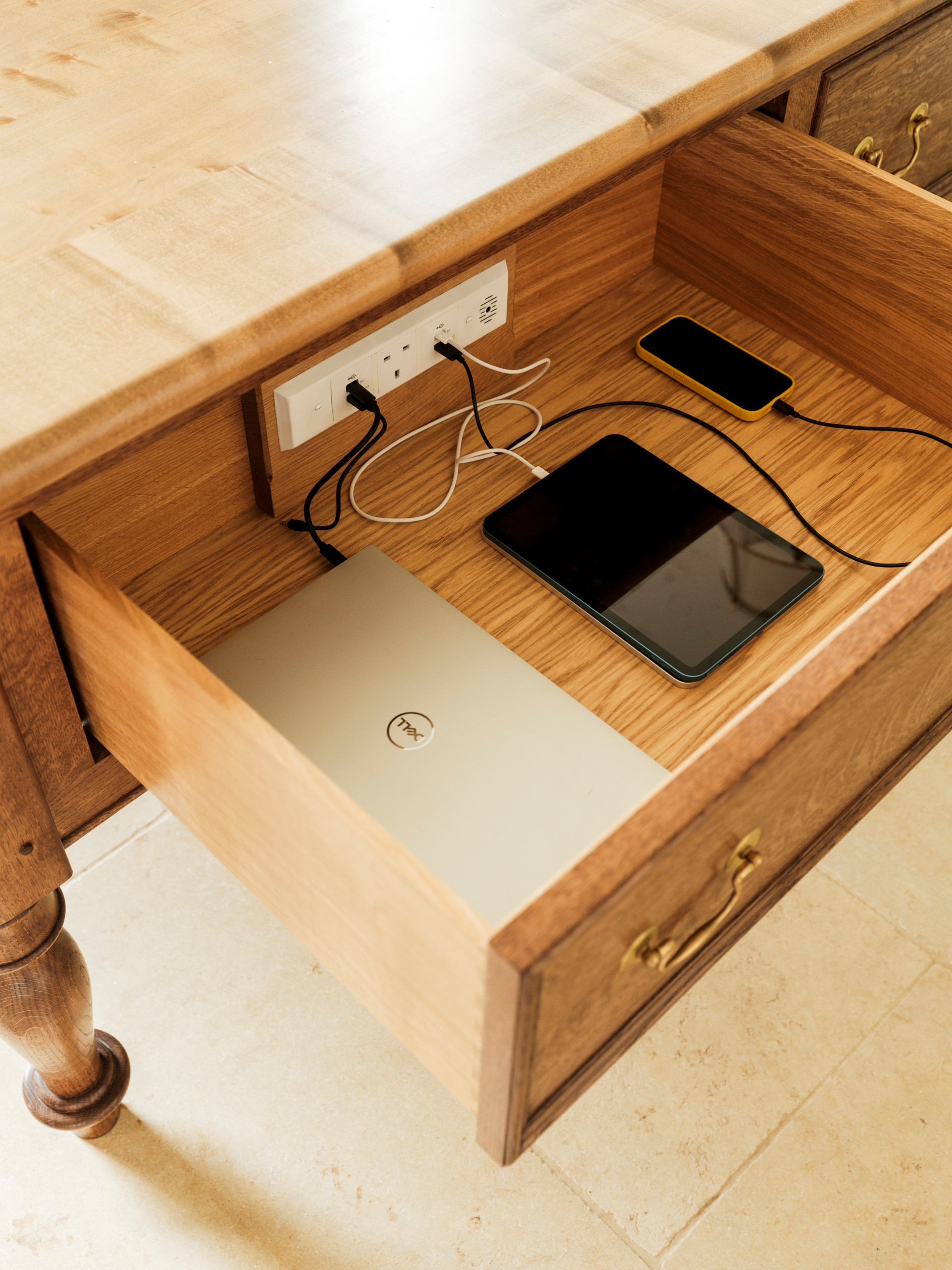
Tucked within the old-style piece is a decidedly modern feature — charging points for the family’s devices. “We ran power up one of the legs,” Petherick says. “It required a lot of coordination with the builder to ensure the electric point came up through the floor in exactly the right spot.”
To secure the table in place, the team used lengths of dowel drilled into the legs and floor.
To secure the table in place, the team used lengths of dowel drilled into the legs and floor.
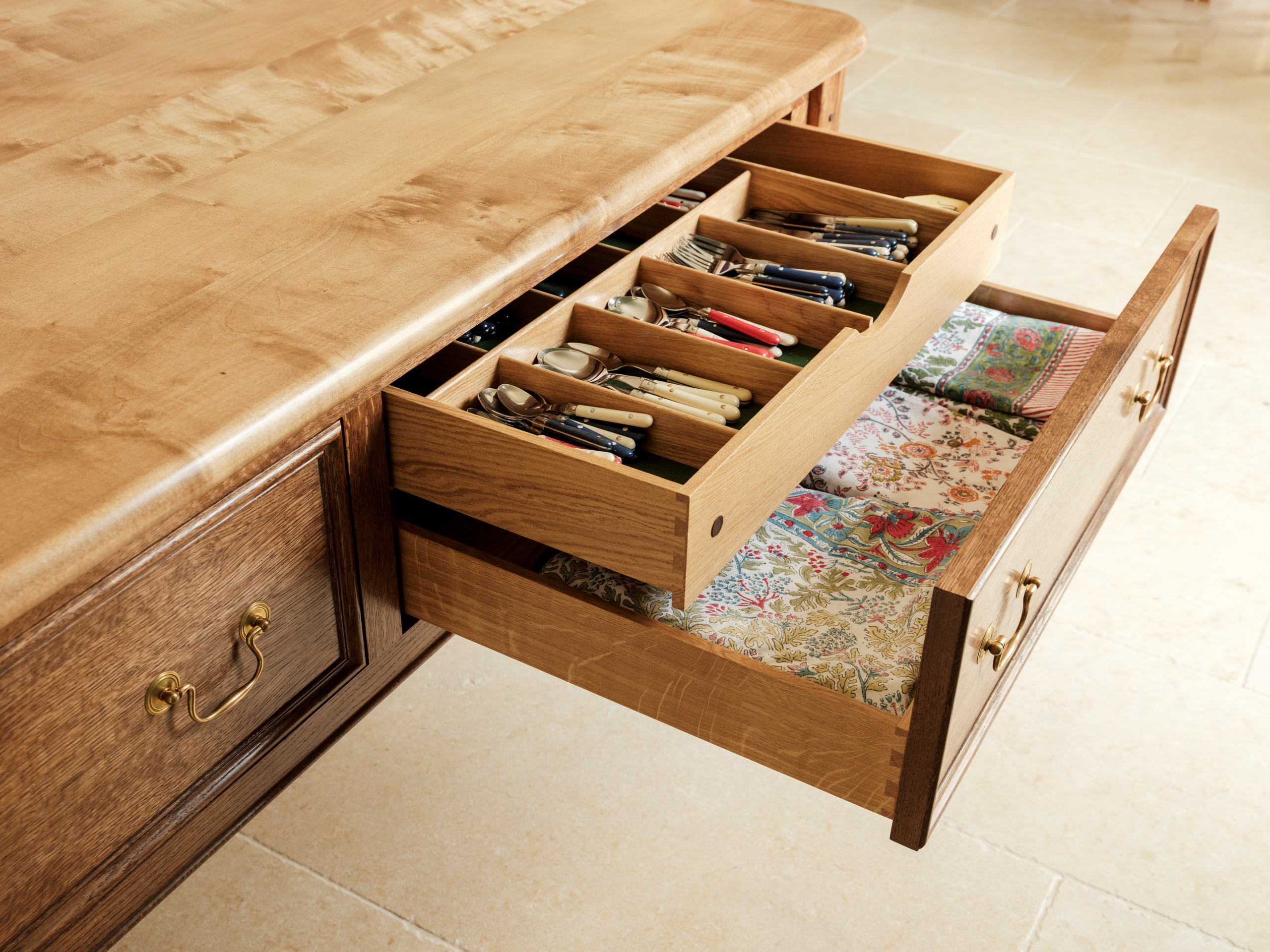
Drawers within drawers ensure dedicated spots for storing everyday essentials such as flatware and napkins.
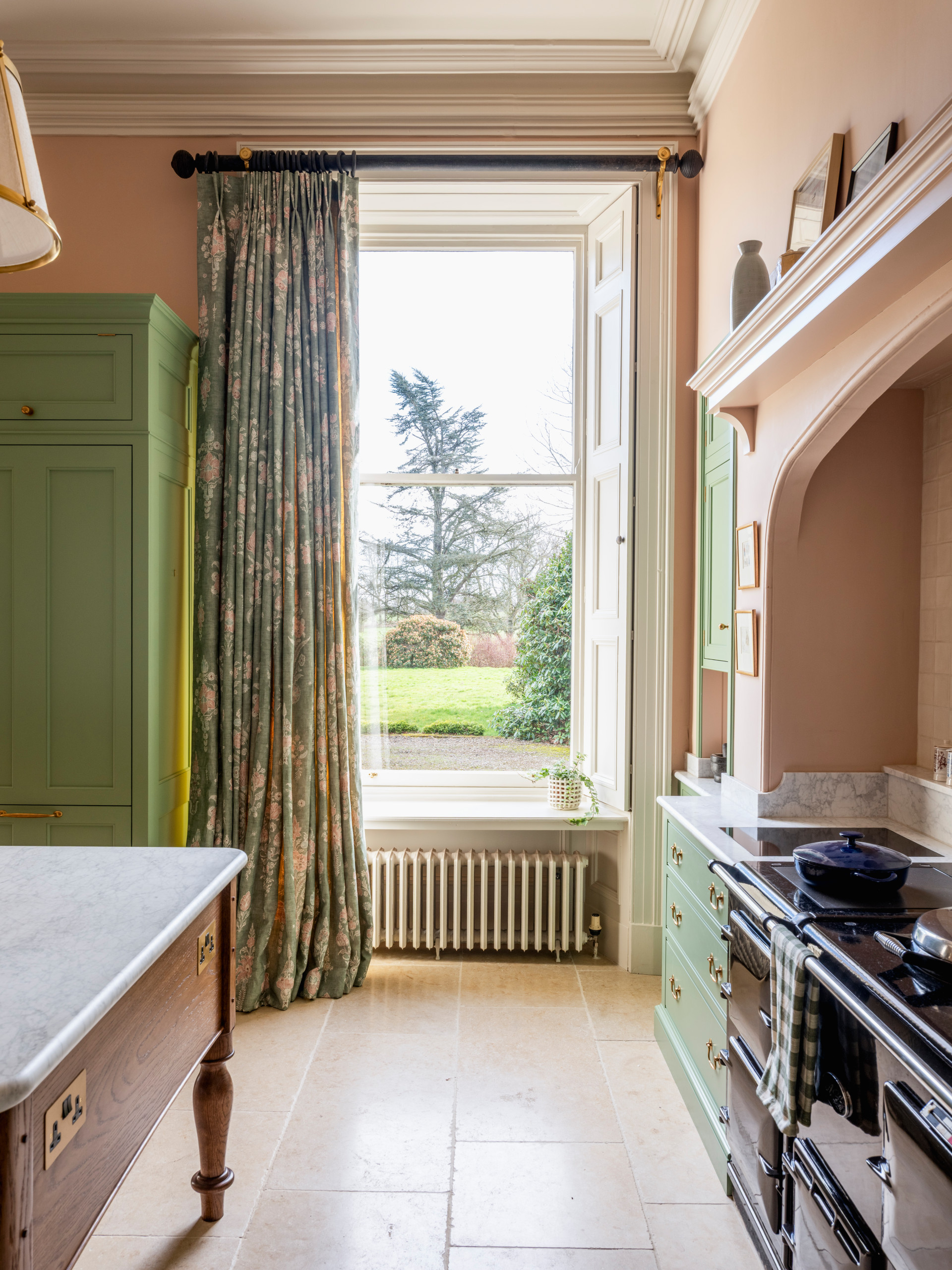
The lighting in the space is discreet. Apart from the two pendant lights over the cook’s table, there are LEDs tucked in numerous places. “We fitted LED lights above the Aga and into the cabinetry, under the plate rack and within the breakfast cupboard,” Petherick says.
The flooring is limestone tile. It doesn’t have underfloor heating, as the column radiators under the windows and the always-on Aga range produce enough heat to keep the space warm.
Not surprisingly, the owners love their new kitchen. “We had to get it done in late 2024, just in time for the Christmas holidays, and we managed to squeeze it in,” Petherick says. “It was an enjoyable project with lovely clients and they’re very happy.”
Curtain fabric: Citadel in Green Glaze, Lewis & Wood
More on Houzz
Read more kitchen stories
Browse kitchen photos for ideas
Find home design and remodeling professionals
The flooring is limestone tile. It doesn’t have underfloor heating, as the column radiators under the windows and the always-on Aga range produce enough heat to keep the space warm.
Not surprisingly, the owners love their new kitchen. “We had to get it done in late 2024, just in time for the Christmas holidays, and we managed to squeeze it in,” Petherick says. “It was an enjoyable project with lovely clients and they’re very happy.”
Curtain fabric: Citadel in Green Glaze, Lewis & Wood
More on Houzz
Read more kitchen stories
Browse kitchen photos for ideas
Find home design and remodeling professionals

Sponsored
Kitchen at a Glance
Who lives here: A family with three young children
Location: On the border between England and Scotland
Size (including the dining area): 590 square feet (55 square meters)
Designers: Andrew Petherick and Kate Lawrence-Parr of Guild Anderson Furniture
The homeowners chose Guild Anderson Furniture for its track record in sympathetic renovations. “When we design, we have ‘estate joinery’ in mind — using moldings, proportion and scale that allow us to create a space that fits well in a Georgian house,” says designer Andrew Petherick. It’s about “being quite understated, not being flamboyant, being quite calm and practical — practicality is a crucial thing.
“If we can hide things like [refrigerators] and fit cabinets within the architecture, as opposed to hanging them on the wall, it improves the overall effect,” Petherick says.
The tall, freestanding cabinet on the left perfectly illustrates the approach. With a feel of a traditional housekeeper’s cupboard, it hides a refrigerator and freezer on the right-hand side. The left-hand section is a breakfast cupboard, with provision racks on the backs of the doors, a marble work surface, drawers and a microwave.